Armored Protective Covers
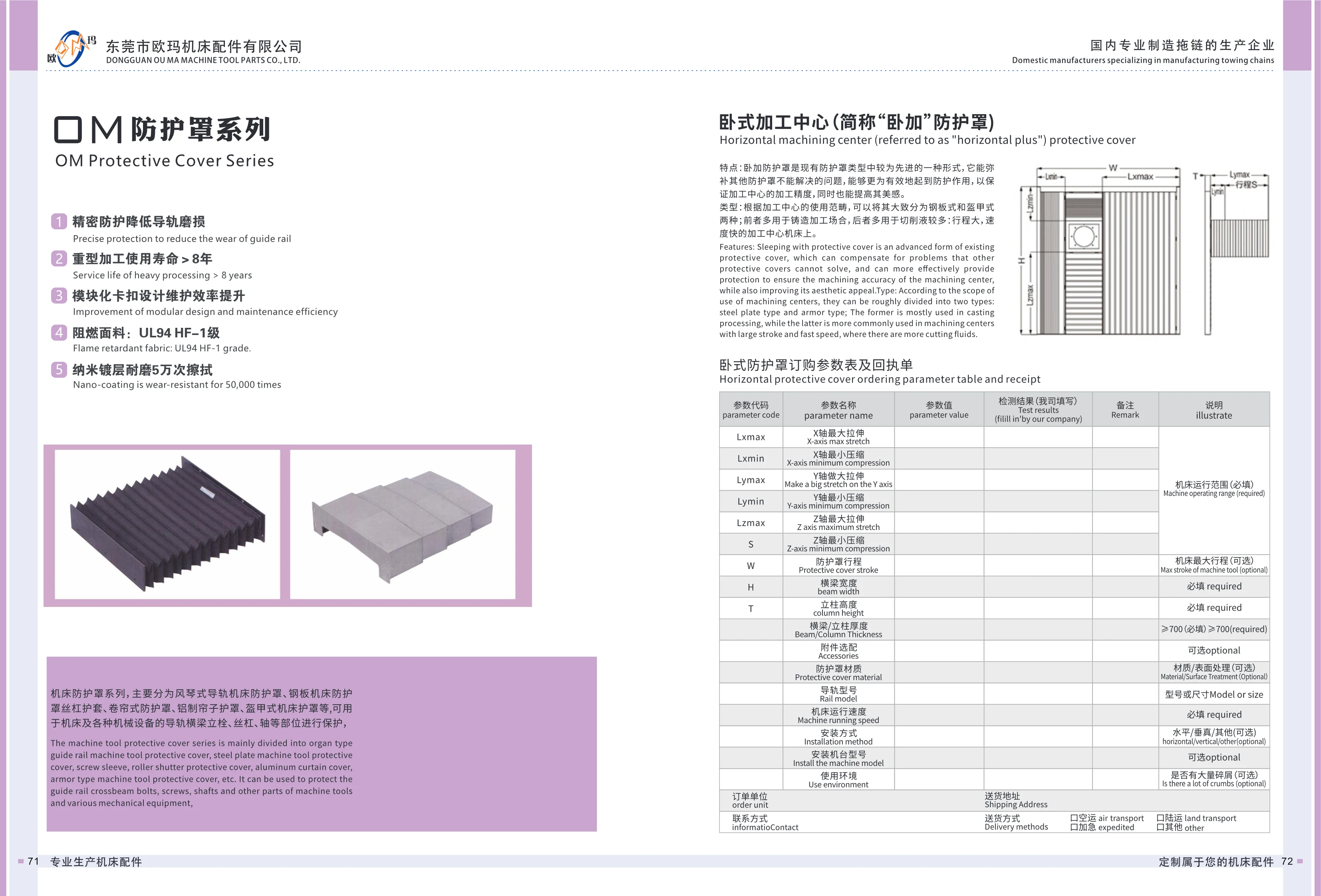
Armored Machine Tool Cover
An armored machine tool cover is designed primarily for machines with long travel, high speeds and heavy coolant use, such as horizontal machining centers. It addresses protection challenges that other covers cannot, safeguarding guideways, crossbeams, columns, lead screws, shafts and other components to maintain machining accuracy and improve equipment appearance. Machining center covers are broadly divided into steel plate and armored types. Steel plate covers are commonly used in foundry machining, while armored covers are generally used on machining centers with heavy coolant use, long travel and high speeds. Features include precision protection to reduce guideway wear, a service life of over 8 years in heavy-duty machining, a modular snap-fit design for easier maintenance, flame-retardant fabric rated UL94 HF-1, and a wear-resistant nano-coating that withstands up to 50,000 wiping cycles. When ordering, provide the maximum extended and minimum compressed dimensions for the X/Y/Z axes, cover travel W, crossbeam width H, column height T and other relevant parameters.
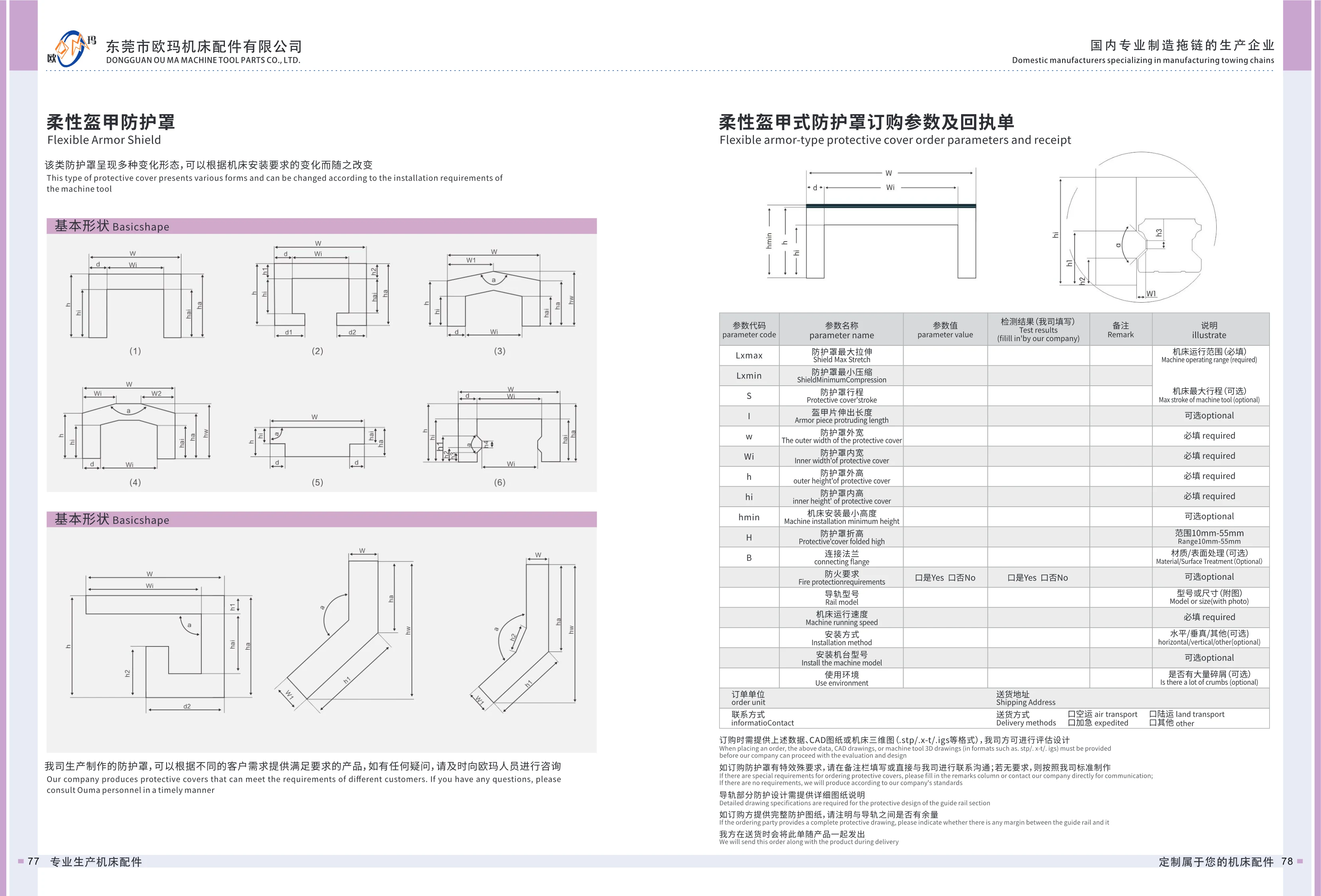
Flexible Armor Shield
The Flexible Armor Shield is a flexible protective cover installed over moving machine tool components such as guideways and lead screws. Made from armor plates joined with flexible material, it can be shaped to suit installation requirements and folds and extends with the moving components. It prevents chips, coolant, dust and other contaminants from entering the guideways and drive system, helping preserve machine accuracy and service life. This product is custom-made to drawings. When ordering, provide the maximum extended length Lxmax, minimum compressed length Lxmin, travel S, armor plate extension length I, outer width w, inner width Wi, outer height h, inner height hi, minimum machine installation height hmin, fold height H (10~55mm), connecting flange material and surface treatment, fire protection requirements, guideway model, machine operating speed, installation orientation (horizontal, vertical or other), machine model and operating environment (including whether large amounts of debris are present). Also provide CAD drawings or 3D files such as .stp, .x-t or .igs. The manufacturer will evaluate the requirements and design the shield before production.