Spoke-Type Load Cell

MS2018 Series Tension and Compression Load Cell
Features: Miniature load cell with a low profile, minimal deflection, stainless steel construction, overload protection, bidirectional tension and compression measurement, and high dynamic response frequency. Applications: Primarily used in push-pull force gauges, injection molding and mold manufacturing, robotic gripping and press-fitting, tension and compression force measurement and control, and automotive assembly force measurement.
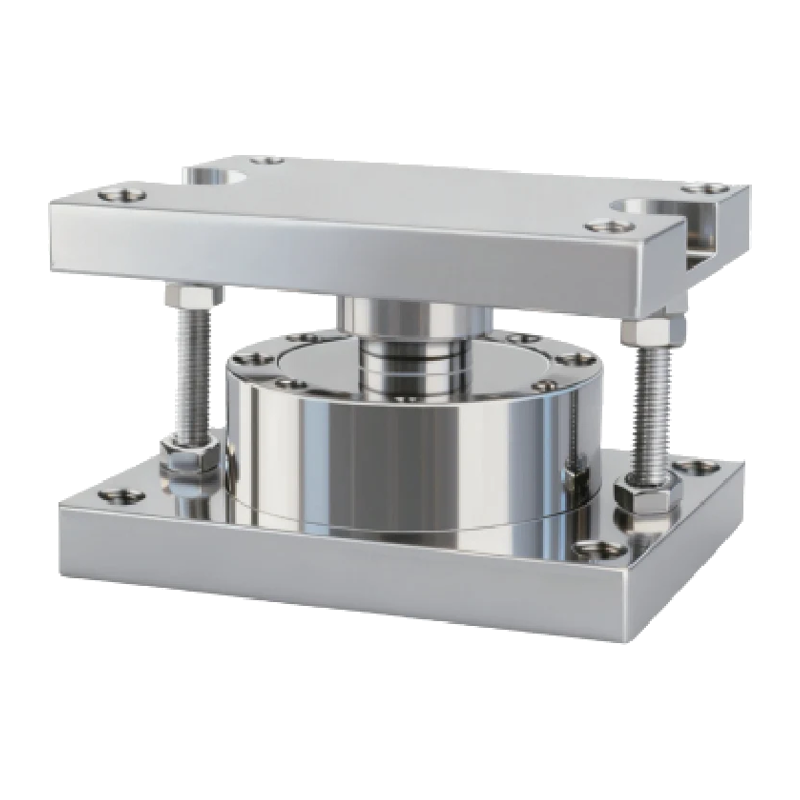
MS2019-MK Series Weighing Modules
Spoke-type load cell made of alloy steel or stainless steel, suitable for both tension and compression. Other capacities can be customized. Used in testing machines, truck scales, hopper scales, and various industrial weighing systems.

MS2031 Series Miniature Tension and Compression Load Cell
This low-profile miniature load cell features minimal deflection, an aluminum alloy or stainless steel construction, and bidirectional tension and compression measurement. It is primarily used in force gauges, automated assembly, 3C product testing, and other industrial force measurement systems. TEDS is optional.

Miniature Spoke-Type Load Cell
The miniature spoke-type load cell (also known as a spoke-type weighing sensor or force-measuring module) is a force measurement device based on a spoke-shaped elastic element. Made from alloy steel or stainless steel, it measures both tension and compression. Its small, compact design offers good resistance to off-center loading and effective sealing, allowing it to be integrated directly into the loading mechanism of a testing machine or into various weighing support points. Capacity can be customized to user requirements (the catalog does not provide a specific capacity table but notes that other capacities are available). Typical applications include materials testing machines, truck scales, hopper scales, and industrial weighing and force measurement systems. The load cell is secured using a central threaded hole and peripheral flange holes, and the load axis must align with the sensor axis. Its strain-gauge bridge signal output can connect to weighing indicators or data acquisition systems. Key selection criteria include rated load, accuracy class, output sensitivity, material (alloy steel/stainless steel), protection rating, and mounting interface dimensions.

Spoke-Type Load Cell
This spoke-type load cell features an alloy steel or stainless steel sensing element and measures both tension and compression. It is suitable for testing machines, truck scales, hopper scales, platform scales, and a wide range of industrial weighing and force measurement systems. Rated capacities range from 5~20t, with C2 and C3 accuracy classes, an output sensitivity of 2.0±0.002mV/V, and a zero balance of ±1%F.S. Nonlinearity, hysteresis, and repeatability can each reach ±0.02%F.S. Other capacities can be customized to meet application requirements.
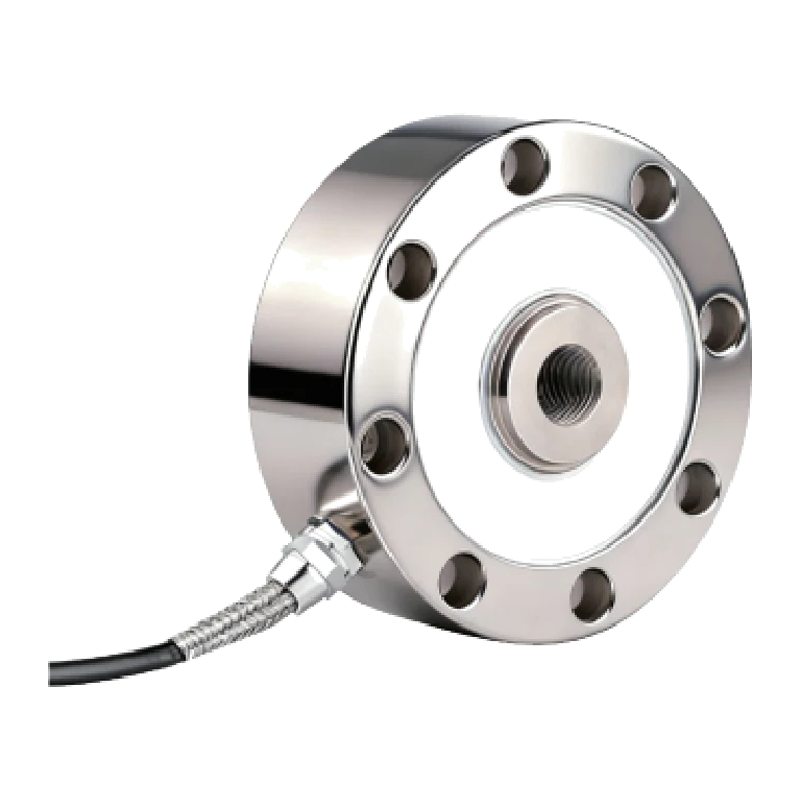
MS2019 Spoke-Type Tension and Compression Sensor
The MS2019 is a spoke-type load cell for bidirectional tension and compression measurement. Its elastic element is made of alloy steel or stainless steel, allowing it to withstand both tensile and compressive forces for applications requiring bidirectional force measurement. Rated capacities range from 0.1~300T, with output sensitivity calibrated to 2.0±1%mV/V for both the 0.1~5t and 0.1~300t ranges. It offers a combined error as low as 0.03%F.S., an output sensitivity of ±1%F.S., and good insulation resistance. The capacity can be customized to suit operating conditions. Its low profile, rigid structure, strong resistance to off-center loading, and fast dynamic response make it suitable for materials testing machines, truck scales, hopper scales, and various industrial weighing and batching systems. It can also monitor press-fitting and gripping forces during production. The load is typically applied to the center of the spokes, and the sensor is secured using threaded holes on the bottom or side. It can be connected to a standard weighing indicator or transmitter to provide a standard signal output.