Model · Tension Sensors
Tension Sensors
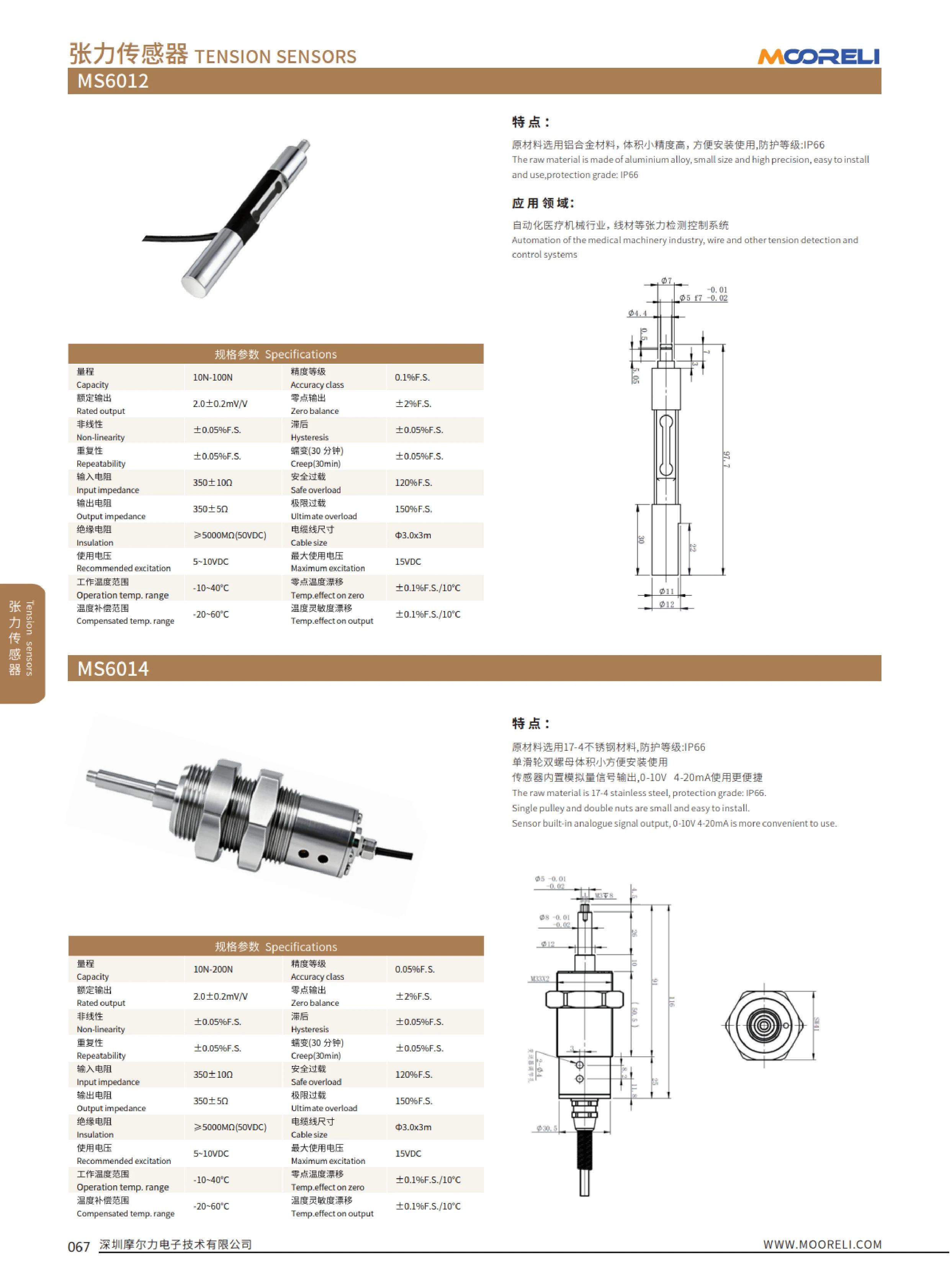
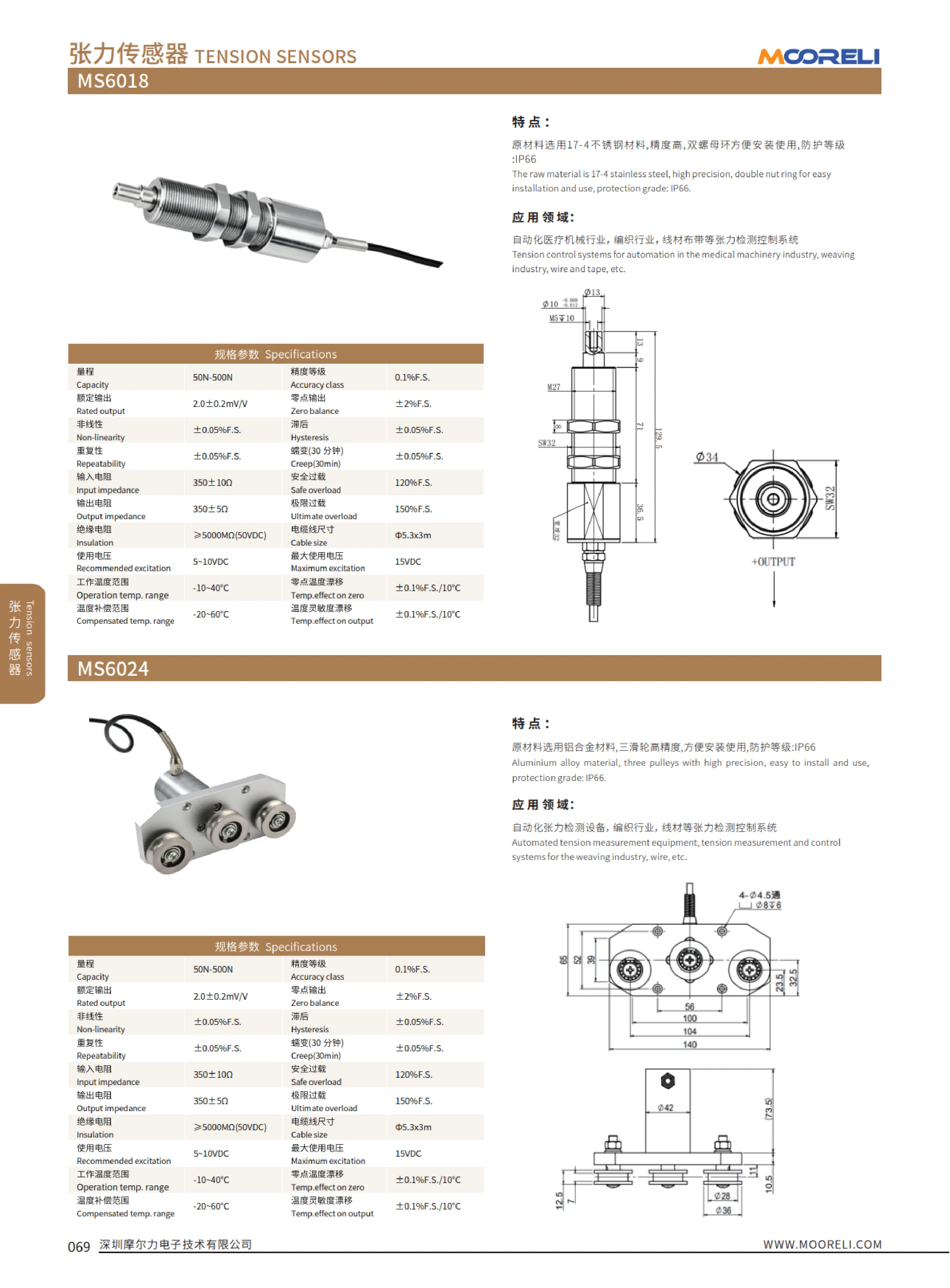
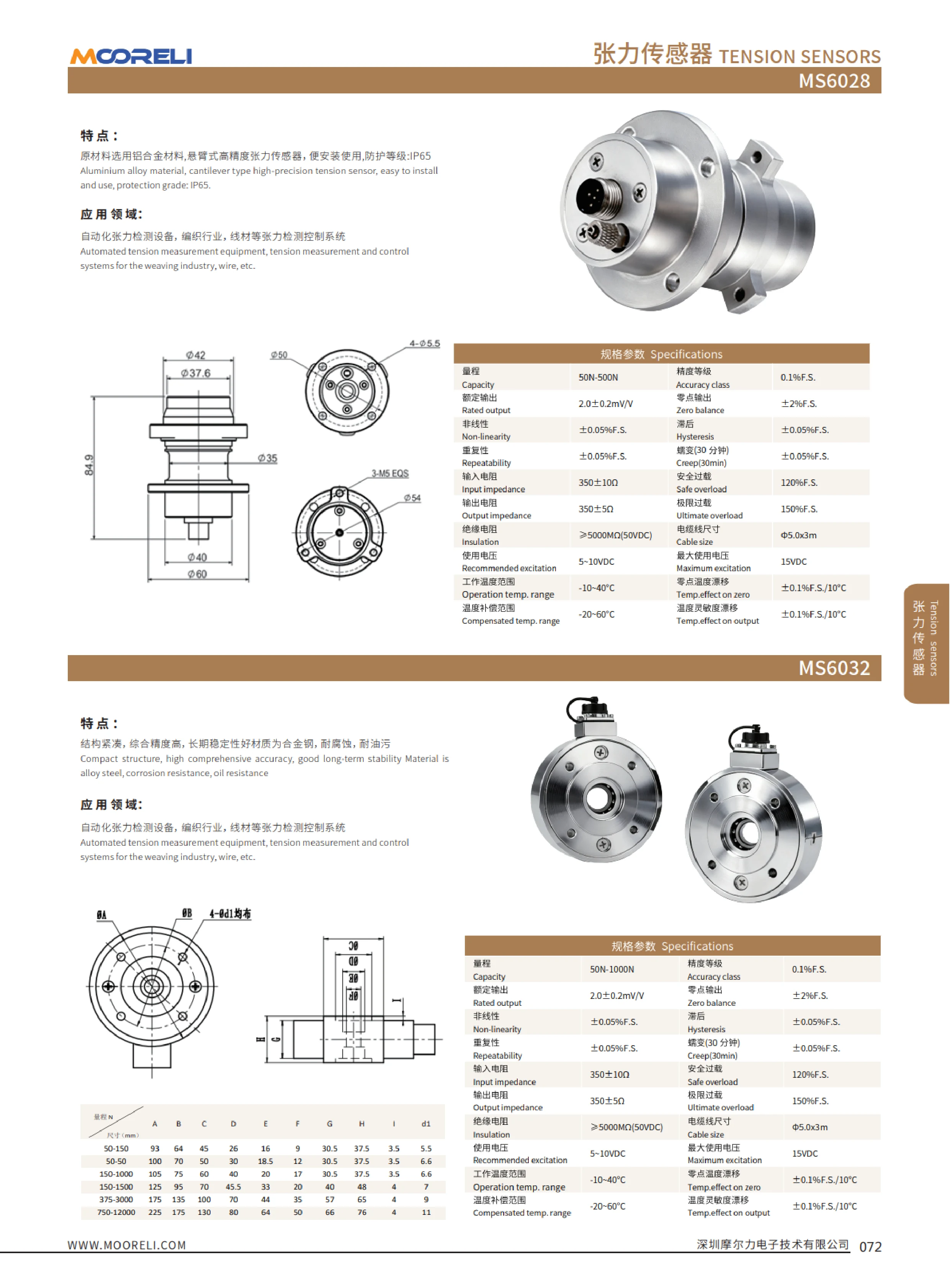
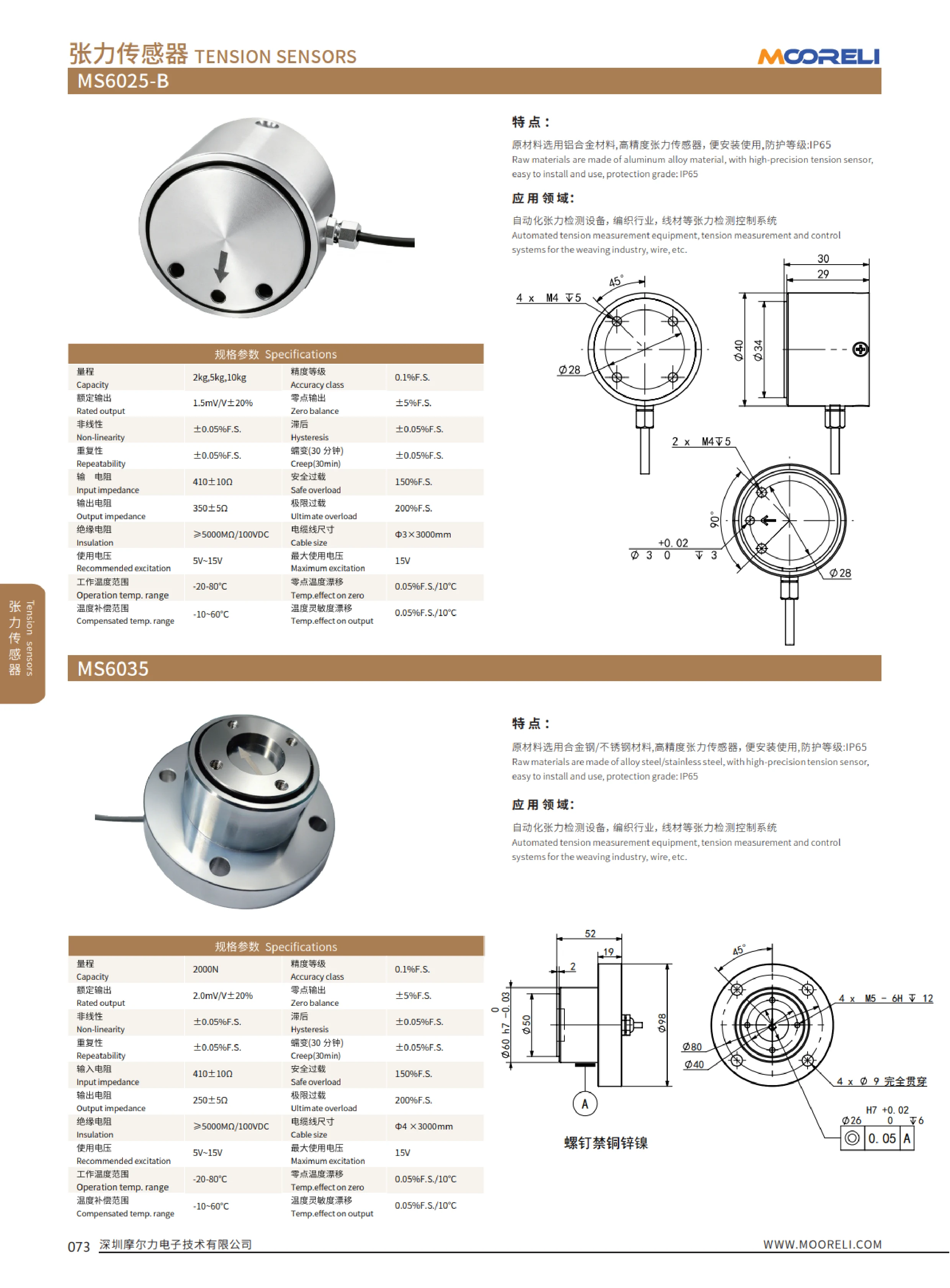
Resistance strain gauge tension sensors are used in automated tension measurement and control systems for in-line monitoring in industries such as medical machinery, presses, weaving, wire, and fabric tapes. Designs include cantilever, double-nut ring, and three-pulley types. Housing materials include aluminum alloy, 1/4 stainless steel, and alloy steel. Aluminum alloy models are compact, highly accurate, and easy to install. Stainless steel and alloy steel models offer compact construction, high overall accuracy, corrosion and oil resistance, and good long-term stability. Measuring ranges span 10N~2000N, with an accuracy class of approximately ±0.1%F.S. and a rated output of 2.0±0.2mV/V (2.0mV/V±20% for some models). Nonlinearity, repeatability, and hysteresis can reach ±0.05%F.S. Input/output resistance is approximately 410Ω, operating temperature is 20~80℃, and protection rating is IP65 or IP66.
Overview
Resistance strain gauge tension sensors are used in automated tension measurement and control systems for in-line monitoring in industries such as medical machinery, presses, weaving, wire, and fabric tapes. Designs include cantilever, double-nut ring, and three-pulley types. Housing materials include aluminum alloy, 1/4 stainless steel, and alloy steel. Aluminum alloy models are compact, highly accurate, and easy to install. Stainless steel and alloy steel models offer compact construction, high overall accuracy, corrosion and oil resistance, and good long-term stability. Measuring ranges span 10N~2000N, with an accuracy class of approximately ±0.1%F.S. and a rated output of 2.0±0.2mV/V (2.0mV/V±20% for some models). Nonlinearity, repeatability, and hysteresis can reach ±0.05%F.S. Input/output resistance is approximately 410Ω, operating temperature is 20~80℃, and protection rating is IP65 or IP66.
Product categories: Sensors/Force Sensors/Tension Sensors


Dimensions & drawings
Original catalogs