Torque Sensor

Static Torque Sensor
The static torque sensor uses the resistance strain gauge principle. Strain gauges bonded to an elastic beam form a full-bridge circuit. After compensation for temperature, zero point, sensitivity and other electrical parameters, it outputs a differential mV/V analog signal that varies linearly with torque. One end has a shaft, flange or square drive and cannot rotate relative to the other end under load. The sensor is compact, easy to install and use, and offers high accuracy and stable, reliable performance. Rated ranges include 4Nm, 0-100Nm, 1-10kN and 1000-5000Nm, with flange connections at both ends. It has an IP65/IP66 protection rating and an aluminum alloy construction. Both safe and ultimate overload are rated at 120%F.S.; insulation resistance is ≥200MΩ; output sensitivity is 1.0±0.2mV/V; nonlinearity, hysteresis and repeatability are each ±0.1%F.S.; and the temperature compensation range is 20-50K. It is suitable for measuring and controlling static and non-continuously rotating torque, including use in torque testing equipment such as torque wrenches and in on-site testing under operating conditions.

Non-Contact Torque Sensors
Non-contact torque sensors transmit torque signals without physical contact, eliminating wear and extending service life. They are suitable for torque measurement and control in static and intermittent rotation applications. Typical outputs include a 10±5KHZ frequency signal, a 4-20mA current signal, and ±5VDC and ±10VDC voltage signals. They can output torque signals for both forward and reverse rotation, making them easy to integrate with PLCs, data acquisition cards, or display instruments. The shaft assembly is made of stainless steel and supports speeds up to 15000RPM. A keyed-shaft version is also available, with keyed shafts at both ends and selectable speeds up to 1800 rpm. These sensors offer high accuracy and stable, reliable performance. Optional speed output and panel displays provide real-time readings of torque, speed, power, and other parameters. They are widely used in motor testing, drivetrain monitoring, tightening and assembly, and test rigs.
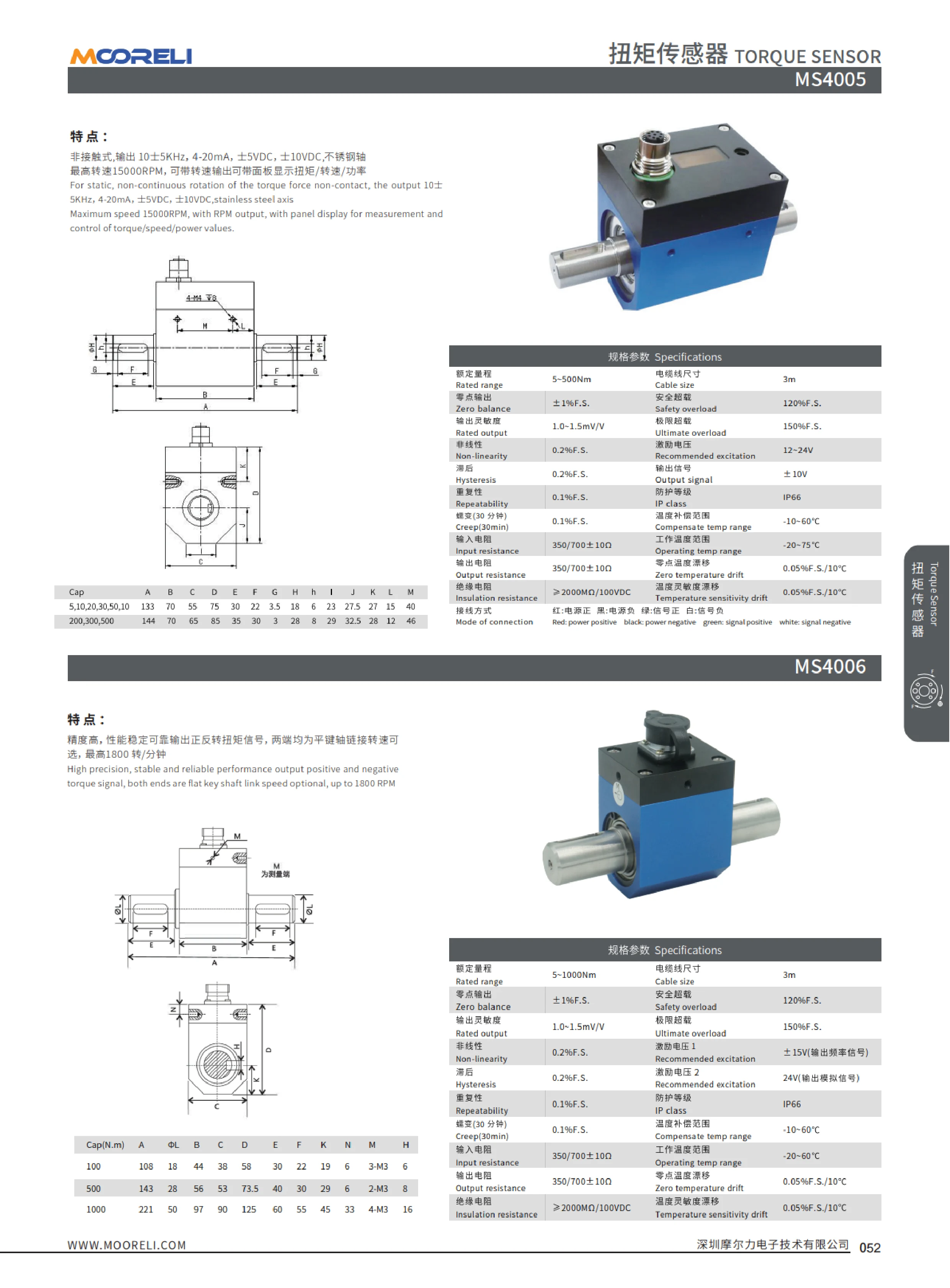
Parallel-Key Shaft Reaction Torque Sensor
This reaction torque sensor features parallel-key shaft connections at both ends and measures torque in both forward and reverse directions. It offers high accuracy and stable, reliable performance, with selectable operating speeds up to 1800 r/min. It is suitable for rotating or static torque measurement applications requiring reaction torque detection. Select the sensor based on rated torque, speed, output signal type, and whether speed output or a panel display is required. No specific model codes are listed on this page.
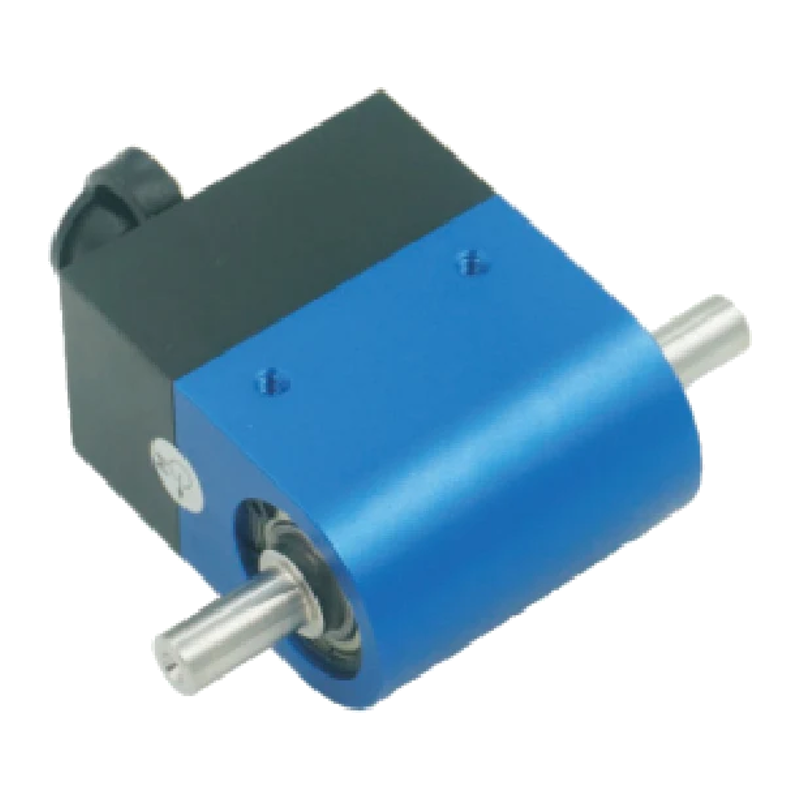
Strain Gauge Torque Sensor
The strain gauge torque sensor combines a resistive strain sensing element with an integrated circuit to measure torque in both directions on a rotating shaft. It offers high accuracy and stable, reliable performance, with keyed connections at both ends for easy installation and use. Rated ranges cover 0.1~5 N·m, with a safe overload capacity of 150% F.S., zero output of ±2% F.S., output sensitivity of 1.0~1.5 mV/V, and a maximum measurement speed of 1800 r/min. It is suitable for rotary drive applications requiring low-range, bidirectional torque measurement.

Torque Sensors
The torque sensor series includes contact and non-contact designs with stainless steel shafts. The elastic shaft is made of 17-4PH stainless steel. The sensors offer high accuracy, stability and interference resistance in a compact, lightweight design that is easy to install. They can operate independently without a secondary instrument, directly outputting a frequency signal or analog output proportional to torque (0-10V, 5V, ±10V, 4-20mA, RS485 or RS232). Forward and reverse torque can be measured continuously without repeated zero adjustment. The non-contact version can provide speed output at speeds up to 8000RPM, with an optional OLED panel displaying torque, speed and power. Ranges extend from 50N to over 1000N, with a combined accuracy of ±1%F.S. Overall dimensions are labeled by segment, including A~M and H1~H3.