Model · Static Torque Sensor
Static Torque Sensor
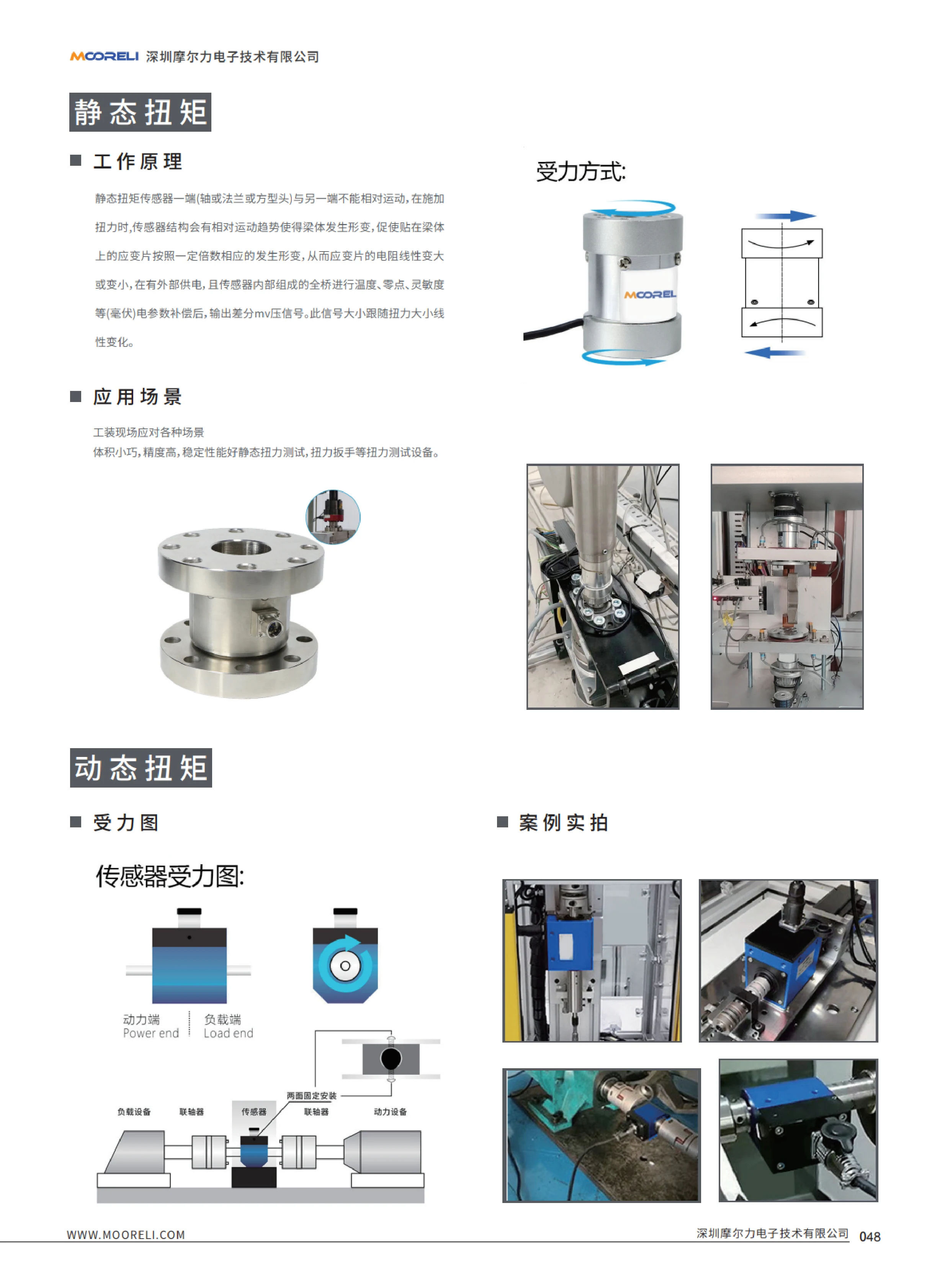
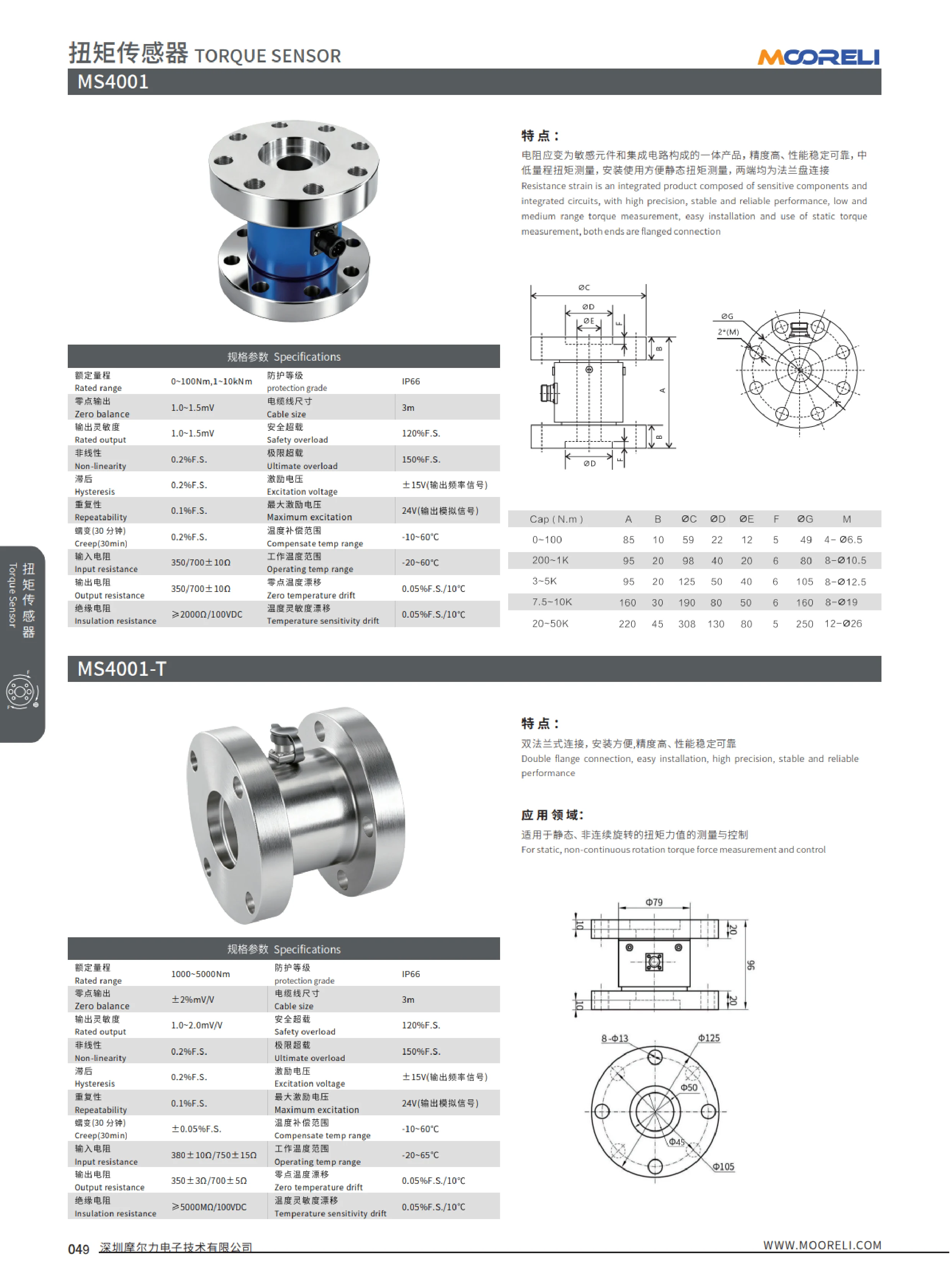
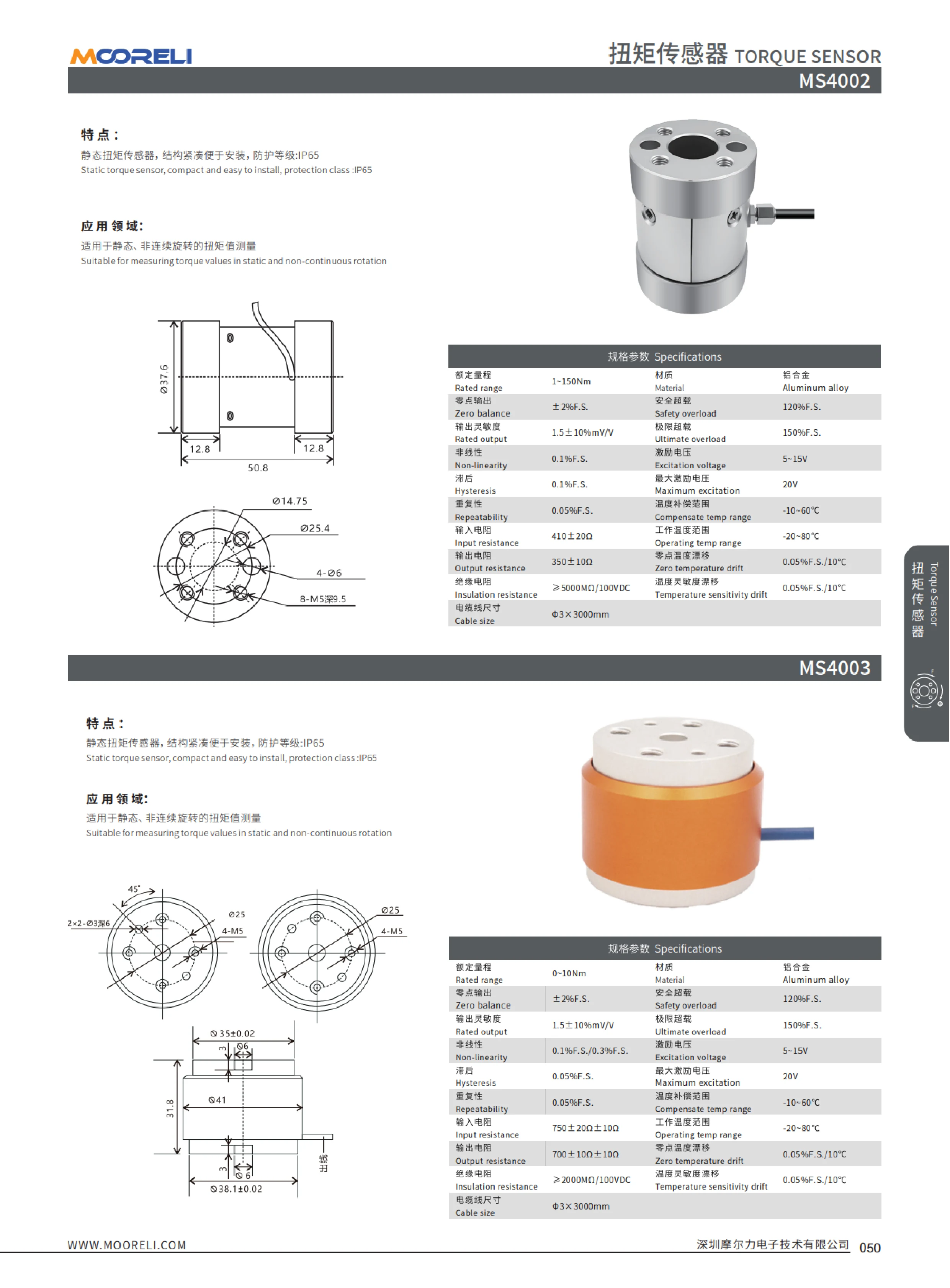
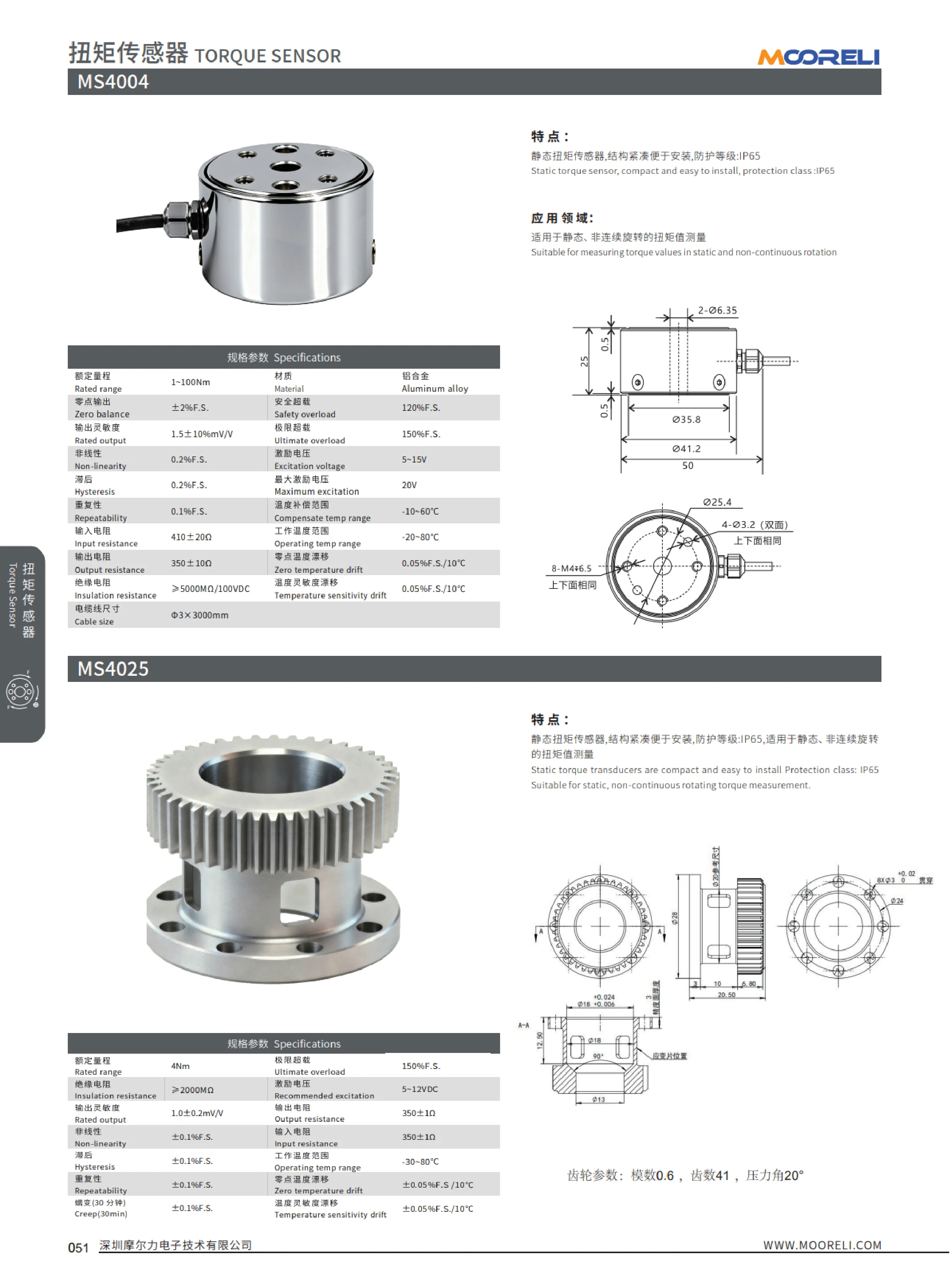
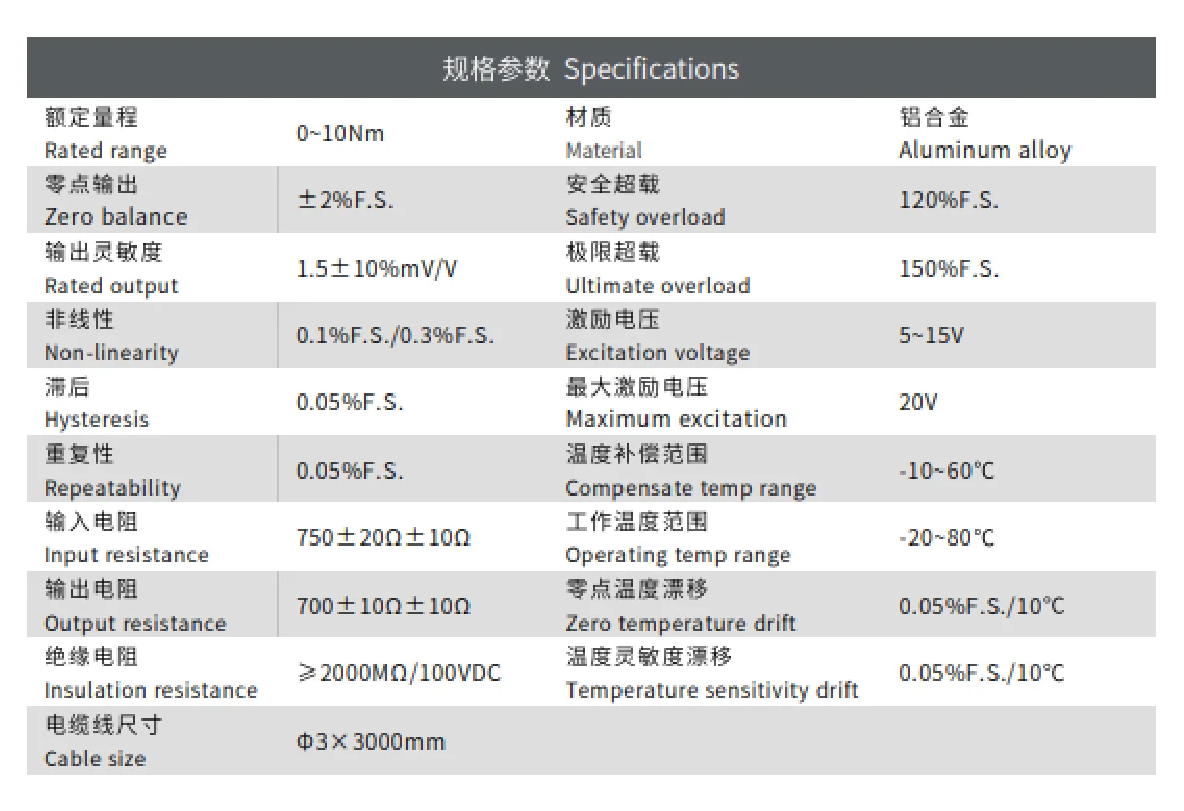
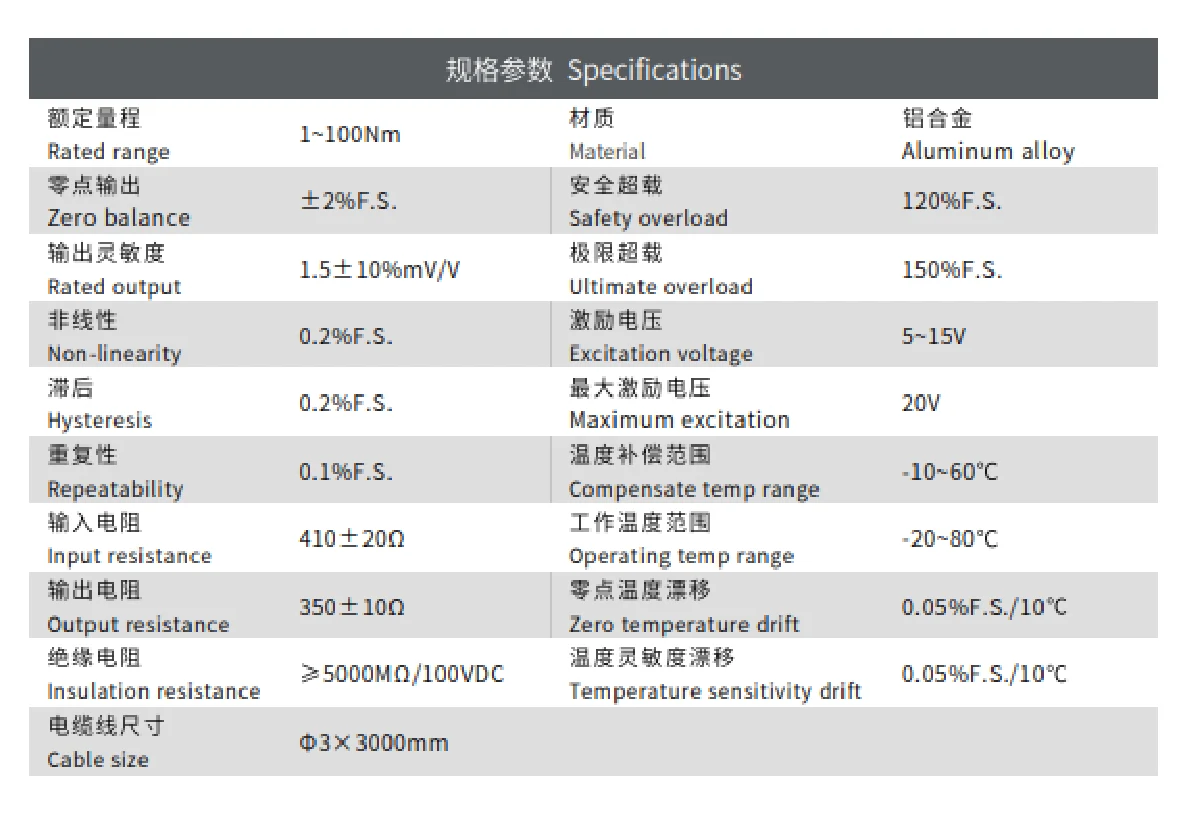
The static torque sensor uses the resistance strain gauge principle. Strain gauges bonded to an elastic beam form a full-bridge circuit. After compensation for temperature, zero point, sensitivity and other electrical parameters, it outputs a differential mV/V analog signal that varies linearly with torque. One end has a shaft, flange or square drive and cannot rotate relative to the other end under load. The sensor is compact, easy to install and use, and offers high accuracy and stable, reliable performance. Rated ranges include 4Nm, 0-100Nm, 1-10kN and 1000-5000Nm, with flange connections at both ends. It has an IP65/IP66 protection rating and an aluminum alloy construction. Both safe and ultimate overload are rated at 120%F.S.; insulation resistance is ≥200MΩ; output sensitivity is 1.0±0.2mV/V; nonlinearity, hysteresis and repeatability are each ±0.1%F.S.; and the temperature compensation range is 20-50K. It is suitable for measuring and controlling static and non-continuously rotating torque, including use in torque testing equipment such as torque wrenches and in on-site testing under operating conditions.
Overview
The static torque sensor uses the resistance strain gauge principle. Strain gauges bonded to an elastic beam form a full-bridge circuit. After compensation for temperature, zero point, sensitivity and other electrical parameters, it outputs a differential mV/V analog signal that varies linearly with torque. One end has a shaft, flange or square drive and cannot rotate relative to the other end under load. The sensor is compact, easy to install and use, and offers high accuracy and stable, reliable performance. Rated ranges include 4Nm, 0-100Nm, 1-10kN and 1000-5000Nm, with flange connections at both ends. It has an IP65/IP66 protection rating and an aluminum alloy construction. Both safe and ultimate overload are rated at 120%F.S.; insulation resistance is ≥200MΩ; output sensitivity is 1.0±0.2mV/V; nonlinearity, hysteresis and repeatability are each ±0.1%F.S.; and the temperature compensation range is 20-50K. It is suitable for measuring and controlling static and non-continuously rotating torque, including use in torque testing equipment such as torque wrenches and in on-site testing under operating conditions.
Product Category: Sensors/Torque Sensors/Static Torque Sensors



Dimensions & drawings
Original catalogs