If an Oldham coupling has excessive backlash, check the working surfaces of the slider tenons and hub grooves for wear, and verify that the bore matches the shaft diameter. Also check shaft misalignment and operating speed, as these affect wear on the slider's working surfaces.
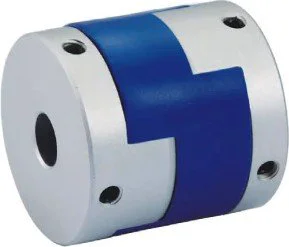
Related product image
Inspect the working surfaces of the slider and grooves
The tenons on either side of the slider engage the grooves in the two coupling hubs. Relative sliding between the tenons and groove surfaces causes friction and wear. Inspect the working surfaces of both tenons and their corresponding grooves for obvious wear.
Check the fit between the bore and shaft
The coupling hubs are secured to the shaft ends, and the bore size should match the shaft diameter to prevent a loose or overly tight fit. The fastening arrangement also depends on the product design: for example, the DGH series is available in set-screw and short clamp styles.
Check misalignment and speed
The slider design can compensate for radial and angular misalignment between the shafts. Measure the relative displacement of the shafts and compare it with the allowable displacement for the model in use. For example, with a steel SL-type Oldham coupling, when the shafts are misaligned, higher speeds increase the centrifugal force on the slider and its wear. Therefore, compare the operating speed with the specified speed for that model as well.